
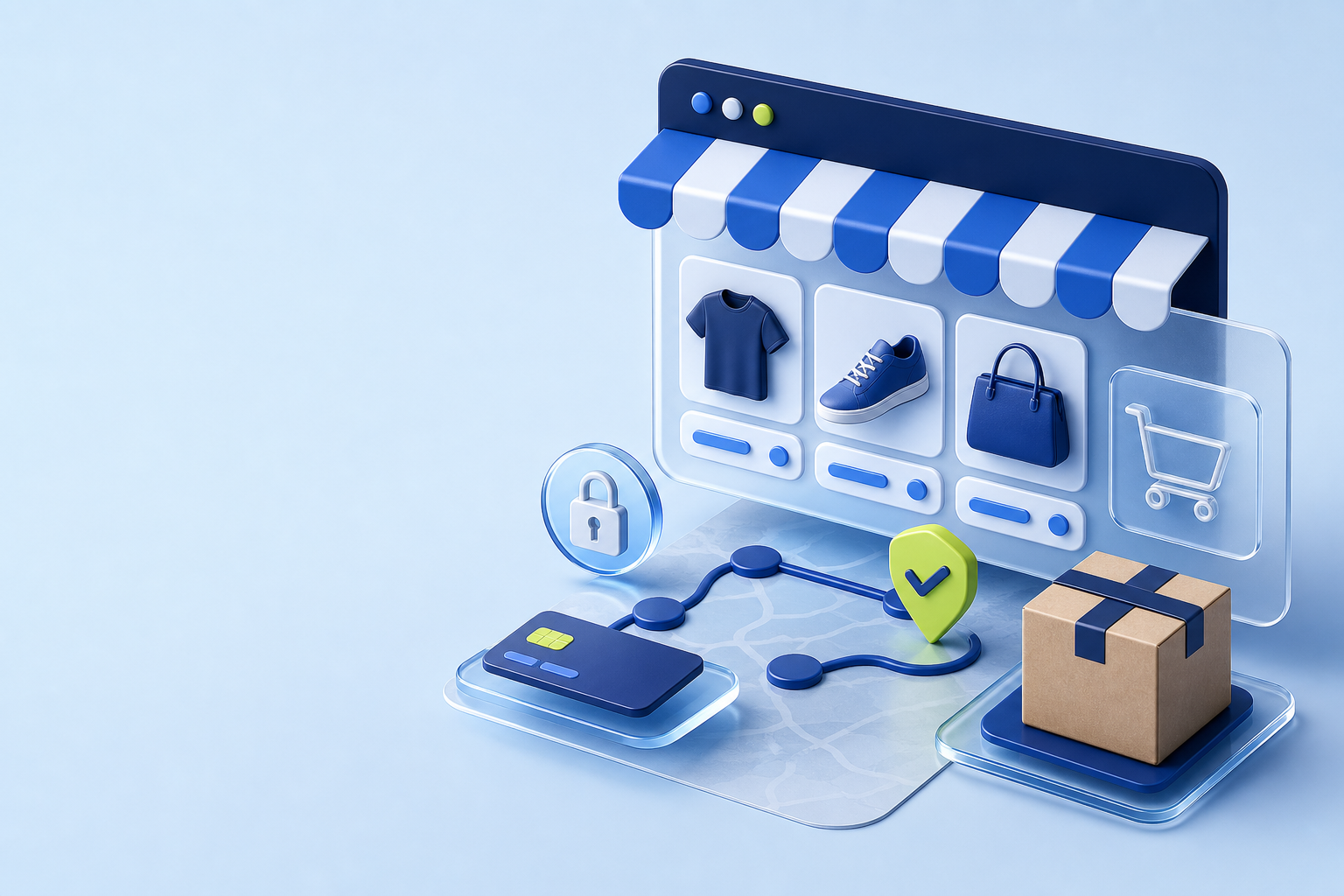
An online store does not begin and end with an attractive design. To sell sustainably it needs clear information, a trustworthy purchase flow, an operation ready to fulfil orders and someone responsible for maintaining the system.
A catalogue that helps people decide
Each product should answer the questions someone would ask in a physical store: what it is, who it is for, price, included items, variants, delivery timing and exchange conditions.
Prioritise consistent photography, specific descriptions, current prices, real availability and easy-to-understand variants. For a large catalogue, categories and filters should reflect how customers search, not only the company’s internal structure.
Payments and security without friction
The store should clearly show available payment methods and guide customers to an understandable confirmation. The checkout must work properly on mobile, where a large part of traffic will arrive.
Security is more than a visual padlock. It includes HTTPS, protected access, updates, backups and a payment integration implemented and tested with the selected provider.
Shipping, stock and customer service
Checkout needs to reflect what the operation can actually fulfil: delivery zones, costs, timing, collection options, special conditions and post-purchase communication.
Before launch, define who confirms payments, prepares orders, updates stock, answers questions and handles changes. A good interface without a clear operating process quickly creates complaints.
Trust signals and continuous improvement
Customers should find contact details, shipping and return policies, privacy information and relevant terms easily. FAQ content and responsive support channels also reduce abandoned carts.
Connect analytics and key events to understand products viewed, checkout drop-offs and sales channels. After launch, review mobile performance, purchase errors, outdated content and simplification opportunities.
Prepare an initial product list, shipping rules, payment methods, legal text, operations owners and useful store references before investing in development. For a growing catalogue, web development can define a realistic first phase. You can also see The Home Brewer Perú case study.